Deputy Sheriff Dewitt Talmage Smith
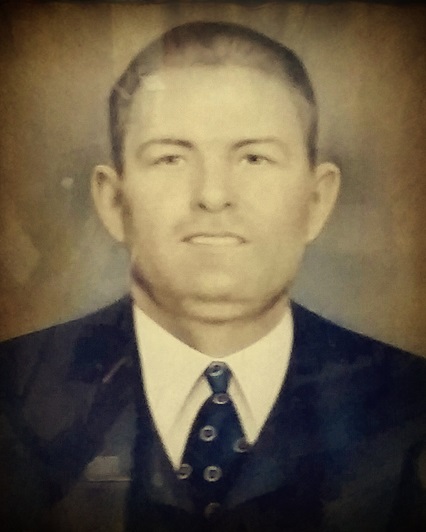
Deputy Sheriff Dewitt Talmage Smith was a well-known and respected member of the Cochran County community whose life ended in violence on December 8, 1939.
Smith came to Cochran County from Wood County in 1924 with his wife, Bessie Mae Fortenberry Smith, and their children, Elmo, Louise, and Oveta. Over the following years he became well established in county life. From 1928 to 1934 he served as County District Clerk, chaired the Cochran County Red Cross, and in 1936 was appointed deputy sheriff.
By all accounts, Smith was widely liked in the community. His death shocked Morton and the surrounding South Plains, and his funeral on Saturday, December 9, 1939 drew hundreds of mourners, overflowing the First Baptist Church. He was laid to rest in Morton Memorial Cemetery.
Events of December 8, 1939
On the morning of Friday, December 8, 1939, Howard Colvin Lackey and J. W. Mann arrived in Morton and called on Mrs. Mildred Taylor, who was an acquaintance of Mann's from Plainview, for coffee. There they were joined by Earl Dewbre, Mrs. Taylor's son-in-law and also an acquaintance of Mann’s from Crosbyton, and the three men set out to Lubbock. Along the way they encountered Raymond Davis, a local farmer and truck driver, who was on his way to Levelland to sell apples. Davis, an acquaintance of both Mann and Dewbre from Crosbyton, stated the men approached him and asked him to accompany them to Lubbock to help them locate Verne Beeve of Whiteface to retrieve a watch they had pawned him. Beeve was currently sick with pneumonia and staying in Lubbock. Davis claimed he didn’t “positively know where Beeves was at in Lubbock” but went with the three men anyhow, leaving his pickup at Simpson’s Service Station.
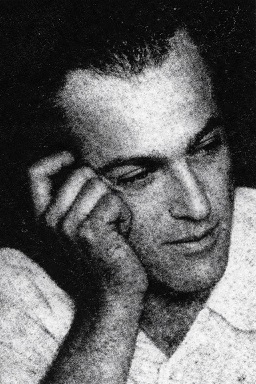
The four men had gone about eight miles east of Levelland, between Dykes gin and the town of Smyer, when the black 1939 Ford coupe deluxe, driven by Mann, hit a trailer belonging to Minor Yarbrough of Morton. The Ford coupe was “spun ‘round and turned over”. The men were picked up from the scene by Clarence Young, an employee of Kuykendall Chevrolet, who was initially told to “drive as fast as possible to a hospital” because one of the men had been hurt. Once they reached the outskirts of Levelland, however, they changed their story and asked to be let out at a service station where they would call friend for help. Young recalls thinking it funny that all four men would leave the accident scene and on his way back to Lubbock came across the accident scene again where the Levelland sheriff had found a gun, a bottle of whiskey and a doctor’s case in the wrecked coupe.
Davis later stated that at the service station Young had left them at, Mann and Lackey, told him they weren’t calling for a wrecker, that the car was hot. Mann told Dewbre he could go on back to Crosbyton that Davis would carry them out from here and Dewbre left the group. Mann drove Davis’s pickup about 10 miles west of Levelland before turning off on to a north road and ordering Davis to take the wheel. Davis said Mann and Lackey were both armed and that Mann had warned him “the less I talk the better it would be for me.”
The three men returned to Morton at around 11 a.m., where they stopped at the Royal Cafe for a few beers before driving to Davis’s home. Around 3 p.m., after leaving the house, Mann spotted Sheriff Tom Standefer’s car and ordered Davis to "drive as fast as he could"drive just as fast as we could go". Davis replied that he would try, but the sheriff would "catch us up and we might as well give up", and soon Sheriff Standefer did. The trio had gone about four miles before the sheriff caught up to them. Davis stated he asked Mann, "how about stopping?" to which Mann replied "okay".
The Shooting Near Morton
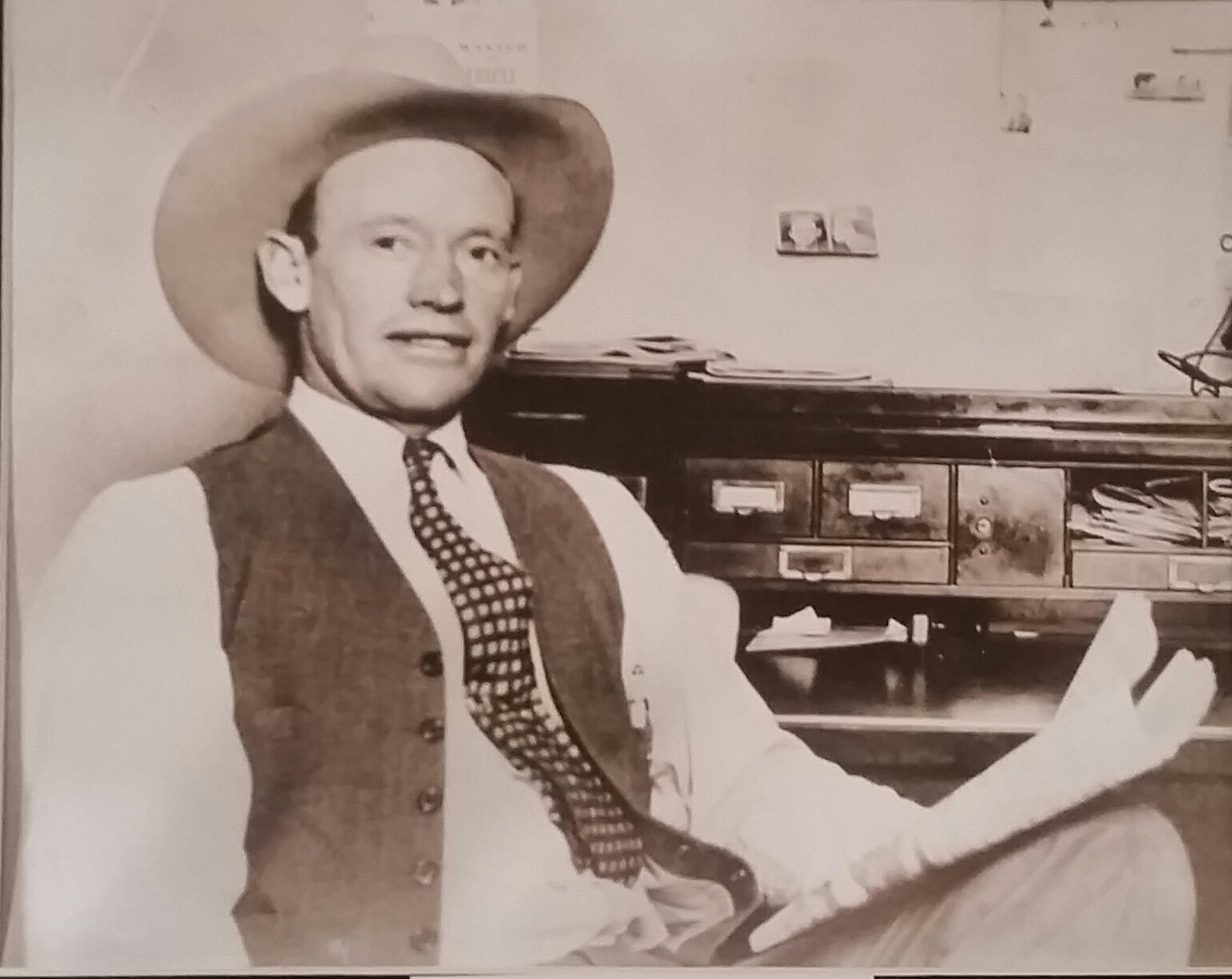
Sheriff Standefer and Deputy Smith had been alerted by Sergeant C. E. Tabor of the Texas Highway Patrol and had gone out to question the men in Davis’s pickup. After a short chase, they stopped the truck about 150 yards south of Kelly’s store. Davis went on to recount, "When I stopped, Tommie got out and talked to us, he asked us what the hurry was and we told him we had started to town." Davis pointed out that Deputy Smith was driving the sheriff's car and that Sheriff Standefer asked if we knew "of a little trouble in Hockley County."
Sheriff Standefer ordered Mann and Lackey into the sheriff’s car and instructed Davis to drive the pickup back to Morton. Davis made the following statement about the events that followed:
"Buddy (Lackey) got out and went around to the car and Smith got in the back seat. Instead of him (Lackey) getting in with him (Smith), Buddy started shooting D. T. while the other boy (Mann), was begging him not to shoot. D. T. was sitting in the back of the car, I laid down in the pickup and don't know how many shots were fired, and when I raised up, Tommie was shooting at Mann and Mann was running across the field. He (Standefer) quit and come up to where I was at the pickup and put the handcuff on me and asked me to hold D. T.'s head up. I got down and held him a few minutes while Tommie got help to load him in the car. He went to the store and then to that house nearby. He took the handcuffs off me and helped load D. T. in the car then came to town and they put him (Smith) in the sanitarium and brought me to the courthouse."
Witness accounts varied on the exact location of Smith’s wound. Most testimony and newspaper reports stated he had been shot in the temple. The December 10, 1939 issue of the Lubbock Avalanche-Journal states "Deputy Smith was shot through the right shoulder, the bullet emerging from the opposite side of his body." Smith's death certificate states he was "shot through chest". What the accounts agree on is that Smith was struck only once and that the wound proved fatal. He died about an hour later at the Morton Hospital and Clinic. Nurse Mary Lou Scifres later quoted one of his final statements as, “I got the man that got me.” Deputy Smith's murder was the first murder of a peace officer in the district in more than ten years.
Lackey, who had been shot four times in the exchange, "once in the neck and three in the body", was taken to Levelland. Paralysis had set in both arms and from his waist down but doctors stated his wounds were not fatal. Lackey would die from his injuries the next day, December 9, 1939.
The Manhunt for J. W. Mann
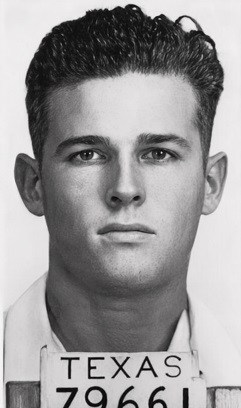
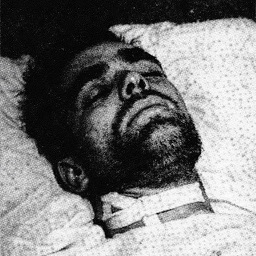
After escaping from the shooting, J. W. Mann ran to the farm of A. E. Robinson and forced Robinson to drive him toward Morton. On the outskirts of town, Mann stole a 1940 Chevrolet coupe parked at the Pennington house and fled, prompting one of the largest manhunts in the South Plains at the time.
The search included Texas Rangers, Texas Highway Patrolmen, officers from numerous South Plains towns, bloodhounds from Pecos, and even machine gun-equipped airplanes. Highway Patrolmen Billy Johnson and Bruce L. Wooddell chased Mann south of Crosbyton in the early morning hours and shot him out of the stolen car, but Mann escaped, unwounded, and fled, jumping a fence and trekking across 15 miles of ranchland with only one shoe, having lost the other in his escape from the car.
Acting on what they later described as a hunch, Johnson and Wooddell captured Mann on December 11, 1939, hiding in a dugout near the courthouse in Crosbyton, where Mann had played as a boy. Among those assisting in the hunt for J. W. Mann were Highway Patrolmen B. J. Patterson, Norvell Redwint, Capt. W. W. Legge, Sergeants Tabor, Laws, and Alder, Lubbock sheriff’s deputies J. P. Posey and Grady Harrist, Texas Rangers Neal Arthur, Pat Taliaferro, Special deputy Frank Mills and deputy constable John Lemond.
Mann did not take the stand during his trial but did make a written statement of the gun fight in which he admitted that Lackey had pulled his gun and that he (Mann) covered the sheriff and told him not to reach for his gun. Mann goes on to say that he saw Deputy Smith reach the rear of the car and he (Mann) fired the first shot then trained the pistol on Sheriff Standefer’s face and pulled the trigger, but the gun, known to frequently jam, failed to fire. Mann’s written statement described a crime spree committed by himself and Lackey before arriving in Cochran County, starting in San Angelo, where they stole a car and robbed a filling station before travelling to Eden where the two men stole another and moved on to Fredericksburg to rob another filling station and steal another car. The pair would travel to Levelland, Roscoe, Roby, where they stole the black 1939 Ford coupe deluxe belonging to Dr. William L. Allen before moving on to Sweetwater and back to Levelland.
During Sheriff Tom Standefer’s testimony he stated he and Deputy Smith had driven out to the Davis home, which sits eight miles southwest of Morton, after Smith had received a call from Sergeant C. E. Tabor of the Texas Highway Patrol, asking them to question the men in the pickup truck. Sheriff Standefer stated he and Smith observed the pickup, driven by Davis, leave before their arrival. A short chase ensued but the officers managed to overtake the truck about 150 yards south of Kelly’s store. Sheriff Standefer went on to tell about being confronted with the guns in the hands of Mann and Lackey when he ordered them into his car. The sheriff stated Mann told him not to reach for his gun but that Mann shifted and fired into the car where Smith was sitting, Mann then fled. Standefer states he fired once at Mann then turned and fired at Lackey who was ducking behind the car. The sheriff stated Davis then rose up from the pickup with his hands in the air. Sheriff Standefer quoted Deputy Smith as saying “I’m shot, Tom, and shot awfully bad”.
Trial and Aftermath
Earl Dewbre was not charged in connection with the case. Raymond Davis received a light sentence for his part in the events. On January 4, 1940, a jury sentenced J. W. Mann to life in prison for the murder of Deputy Sheriff Dewitt Talmage Smith.
The story did not end there. J. W. Mann, along with two other life term prisoners, Andrew H. Nelson, a habitual criminal, and Robert Lacy, a convicted murderer from Dallas who used the alias Robert Lacy Cash, would escape on January 13, 1940 near Buffalo, Texas, while being transported from the Lubbock to the state penitentry at Huntsville. J. W. Mann slipped his cuffs and freed the other two men, then convinced W. R. Crane, the prison transfer agent, to pull over. The three men quickly overpowered Crane and beat him unconscious before stealing his gun and his automobile, kicking off one of the biggest manhunts in the state of Texas. Mann and Nelson were captured at a beer tavern in Goldsmith, Texas on January 25th, when the car they had stolen was spotted outside the tavern. Robert Lacy Cash was captured at a campground near Boulder, Colorado on March 19, 1940.
Sources
- Texas’ Last Frontier: A New History of Cochran County by Elvis Fleming and David Murrah
- The Lubbock Morning Avalanche, Lubbock, Texas
- The Lubbock Avalanche-Journal, Lubbock, Texas
- The San Bernardino County Sun, San Bernardino, California
- The Independent Record, Helena, Montana
- The Abilene Reporter, Abilene, Texas
- Valley Morning Star, Harlingen, Texas
- The Amarillo Globe Times, Amarillo, Texas
- The El Paso Herald-Post, El Paso, Texas
- The Vernon Daily Record, Vernon, Texas
- The Brownsville Herald, Brownsville, Texas
- The Clovis News Journal, Clovis, New Mexico
Photographs courtesy Texas’ Last Frontier Historical Museum.