The Kimes Gang
The Kimes Gang, also known as the Kimes-Terrill Gang of the 1920s, was notorious not only for its high-profile bank heists, but also for its frequent prison escapes.
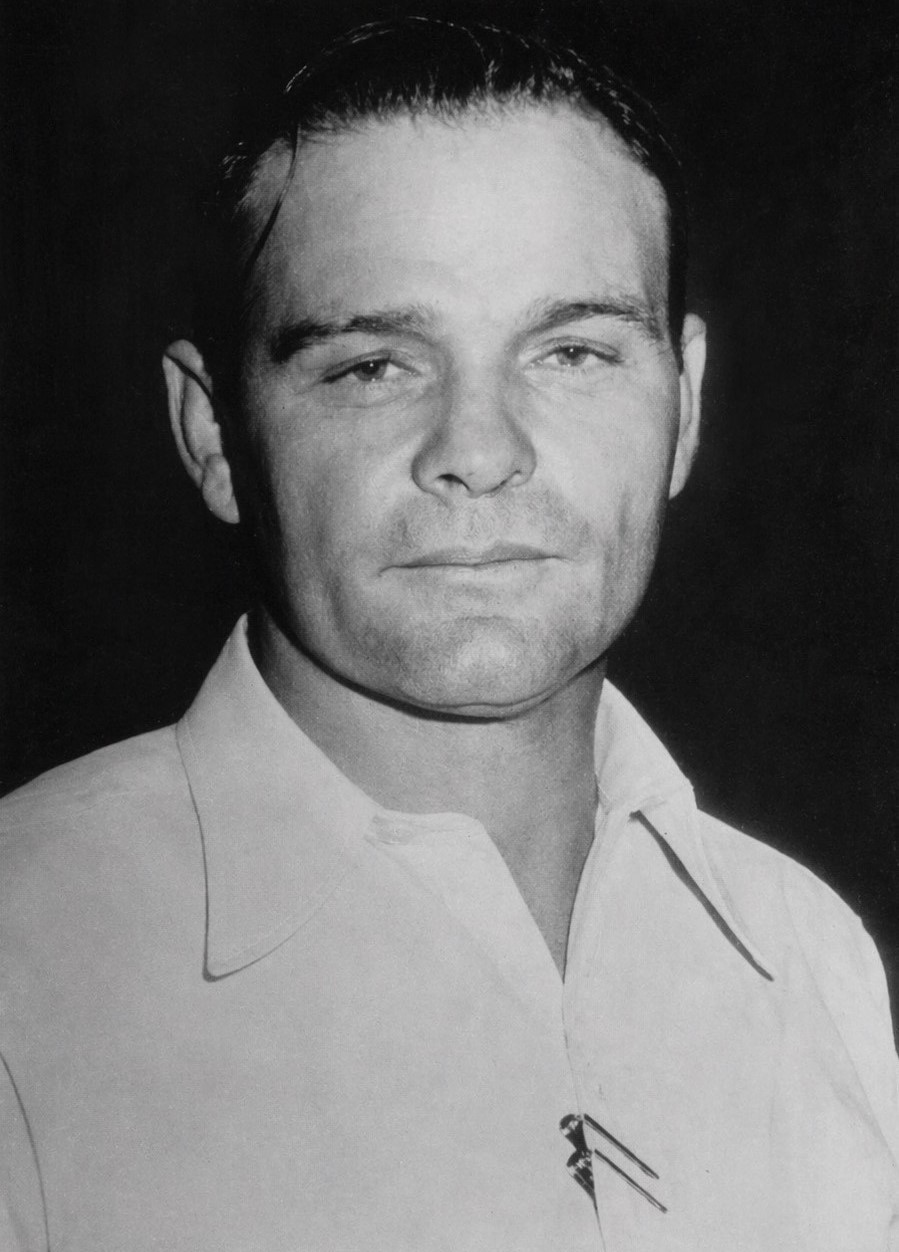
Matt Kimes, dubbed “The Kid Outlaw,” relished the attention generated by newspaper headlines. He refused to wear a mask during bank robberies, often stating that he wanted to be recognized. The gang frequently carried out multiple robberies in a single day, thriving on the daring and the high-speed getaways. Newspapers across the nation compared Matthew Kimes and his gang to Jesse James, calling Kimes “a young James.”
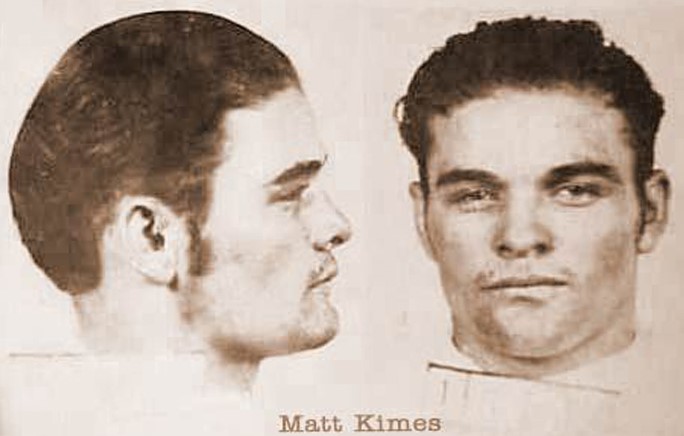
After the robbery of the First State Bank in Morton, Texas, on September 5, 1945, Matt Kimes was described as the “last of the bandit chieftains.”¹ Veteran peace officers, with “scores to settle” with Kimes, “oiled their guns and took up the hunt.” J. Edgar Hoover called Kimes “one of the most viciously sought fugitives in the nation.”
After serving 18 years of a life sentence for the murder of Beggs, Oklahoma, Police Chief William J. McAnally, Matthew Kimes was granted a 60-day leave of absence on July 24, 1945, by the Oklahoma State Pardon and Parole Board to gather evidence in support of his request for parole. Instead, he chose to escape.
Kimes made his way from Oklahoma to Texas with Oliver “Ollie” Melton and Olaf Alvin “Chick” Rogers. Eventually, they arrived in Lubbock, where they stole a 1941 convertible Pontiac coupe with Louisiana plates from Private Ray Carpenter at Lubbock Army Air Field.
The Robbery
The trio reached Morton on September 5, 1945. At approximately 12:30 p.m., the maroon coupe—missing its right headlight and right rear fender—was parked in front of the First State Bank. Rogers remained outside with the car while Kimes and Melton, one of whom wore a mask, entered the bank and announced, “This is a hold up. All of you get over there and turn toward the wall.”
One customer, J. R. Roddy, initially thought it was a joke and responded, “Go to hell.” He quickly complied when the two men informed him that he “would be blown in two.”
The robbers herded the customers and employees, including bank president W. W. Williamson and his 14-year-old daughter, into the smaller of the bank’s two vaults. Williamson pleaded with Kimes and Melton to allow some of the group to be placed in the larger vault, but his requests were met with threats.
Myrtle Ray, a cashier at the bank, was forced to open the safe, and the two men took the money, totaling $17,692.46. Kimes and Melton then threatened to kill anyone who came out of the vault before thirty minutes had passed.
Bank president W. W. Williamson later gave the following account of the robbery:“I was returning from lunch. One door away from the bank I saw a red car, maybe a Pontiac. It had the right headlight missing. The engine was running. Three men were standing there near it, in rough clothes. I had a hunch, but didn’t think much more about it, for I got busy just as soon as I got into the bank and found it full of customers. I was waiting on J. R. Roddy when two of the men came in and said, ‘This is a hold up. All of you get over there and turn toward the wall.’ Roddy must have thought it was a joke. ‘Go to hell!’ he said. One of the men jammed a pistol into Roddy’s stomach and told him ‘I’ll blow you in two!’ and Roddy got his hands up quickly.”
“They locked us all into the little vault. There were four other bank officials: Myrtle Ray and Mozelle Hill, assistant cashiers; Geneva Famuliner and Mrs. Williamson, bookkeepers. And they herded us into the vault with us all the customers in the bank. All in all, there must have been 16 of us in there. We stayed about five minutes and the ventilation was bad. We couldn’t have stayed too long. But the vault door was only pushed to and, hearing a noise out in the lobby and deciding to take a chance—the men had told us ‘if anybody sounds the alarm in 30 minutes we’ll kill every damn one of you!’—we went out and found that the robbers had gone. The sheriff was after them in five minutes after we’d been locked up. The red car went east, and then was reported right after that going south toward Bledsoe. The gunmen were the toughest I’ve ever seen. These fellows today cussed and raised the devil every time any of us even acted like we’d turn our heads around from the wall where they had us lined up. They forced Mrs. Ray to open the vault; the loss is insured. I remember only some of those who were in the vault, except the bank officials. We were all pretty excited, as you can imagine. Clyde Gilbreth, Mrs. N. J. Russell, Roddy, Mrs. Otis D. Chessir, Otho Denny, Winford Patton, George P. Smith, Roy Jackson, and Billye Lee [Williamson’s 14-year-old daughter]. I asked them to divide us up and put some of us in the other vault and the gunman answered, ‘By God, we’re giving the orders here.’ One of the gunmen told Mrs. Ray to go to the phone in the vault ‘and tell the sheriff to come get us.’ Mrs. Ray apparently thought she had misunderstood, and asked what he said. ‘You know [Sheriff] Mac Hancock, don’t you?’ Not waiting for an answer, the bandit poked his gun into Mrs. Ray’s side two or three times and forced her to open the safe. The gunplay continued when he demanded ‘the rest of the money’ and Mrs. Ray continued to tell him, ‘That’s all the money we have.’”
Williamson referred to the men as “cool, detached and plenty rough.”
Mozelle Hill was the last to enter the bank, and one of the gunmen stuck his gun in her side and forced her into the vault with the others.
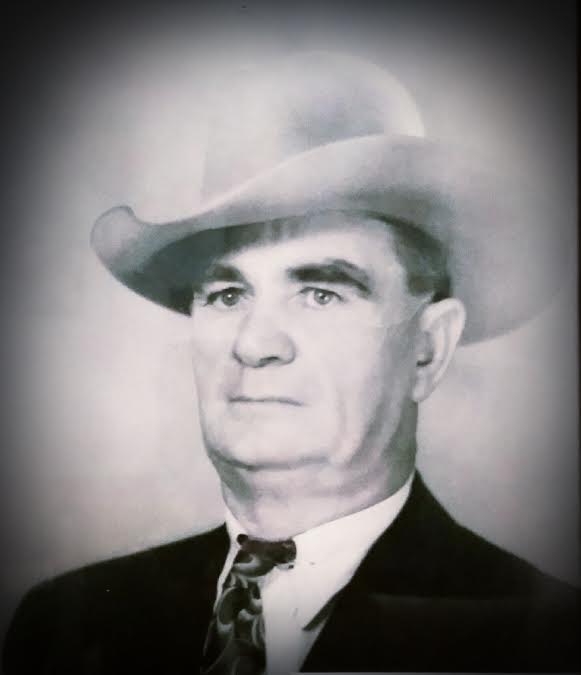
Clayton Stokes saw the two men rush out of the bank carrying money sacks and join a third man in the waiting car. Stokes ran to the office of Sheriff Mac W. Hancock and reported the crime. Sheriff Hancock later stated:
“Stokes came rushing into my office at 12:50 and said the bank had been robbed and that the hijackers had headed east. We got in my car and took off after them.”
The Manhunt
That afternoon, two planes from Lubbock Army Air Field and a private plane flown by Gordon Tolliver of Morton searched the land between Texas and New Mexico for the robbers. Douglas Meador and Tyrus Williamson, Williamson’s 22-year-old son, were the first persons to enter the bank after the robbery and before those in the vault came out, the door of which had never been locked. Williamson called Lubbock and reported the robbery.⁶ Meador borrowed a plane from Muleshoe and joined the aerial search.
Descriptions of the suspects were recorded soon after the robbery. The masked man appeared to be about 40 years old, around 5 feet 8 inches tall, and weighed approximately 185 pounds. He was dressed in khaki and carried either a .32 or .38 caliber automatic. The other gunman was described as about 35 years old, 5 feet 11 inches tall, weighing around 170 pounds, with dark hair and a dark complexion, and carrying either a .38 or .45 revolver. The man standing guard outside was described as “dark” and having “the appearance of a soldier.”
The trio was last seen in the stolen Pontiac at about 2:00 p.m. that day near the stock gate of the Bledsoe School. By nightfall, the robbers had been traced to the sandhills near Bledsoe, where they abandoned the Pontiac and fled on foot.
Sheriff Hancock later stated:
“[Texas Ranger] Redwine saw the glint of the car as we passed it. We stopped and found one track—only one. The theory is that the bandits, all three of them, doubled back after they had been seen at the Bledsoe School, two of them leaving the robbery car sometime before we found it abandoned. We started tracking when daylight broke, but we couldn’t pick up any signs in the shinnery brush. The bandit had an advantage over us; there had been a shower during the night and the wind blew up brisk. That would have the effect of shifting sand and otherwise helping disguise foot prints. He must have holed up [somewhere]. Lt. Van D. Chowson of the Lubbock Army Air Field cruised all over this country at about 140 miles an hour in an AT-6; he could see 50 miles away and flew down to take a look at everything suspicious. A Staff Sergeant Genger also flew with him. I surely appreciate that help and that from the private pilots who entered the search, not to mention all the officers who came from all directions.”
Despite the efforts of numerous volunteers and the aerial searches, the robbers escaped, setting off “the biggest manhunt since the days of Pretty Boy Floyd.”
At approximately 10:45 p.m., word was sent through the Cochran County Sheriff’s Office and Lubbock Police radio station KGZW that all available men were needed immediately, with “plenty of flash and spot lights and flashlight batteries.” Two Lubbock FBI agents, Texas Ranger Captain Maney Gault, and Rangers Norvell Redwine and Raymond Waters joined Sheriff Hancock in the search. Officers converged on an area two miles west of Bledsoe. Ranger Redwine estimated that they were an hour and a half behind the trio. Officers speculated that the robbers had a second car hidden somewhere in the sparsely populated area around Bledsoe.
The following day, Sheriff Hancock stated,
Arrests
On September 6, three men were arrested in Carlsbad, New Mexico, for auto theft and as suspects in the robbery of the First State Bank of Morton. Sheriff Hancock took eyewitnesses to Carlsbad on September 7 for identification. The witnesses determined that the trio being held there was not the trio involved in the Morton robbery.
Ollie Oliver Melton, one of the gunmen, escaped to Shawnee, Oklahoma, where he was arrested on October 23, 1945. Melton pleaded innocent, failed to make the $50,000 bond, and was bound over to the U.S. Marshal until the next session of federal court in Lubbock. Melton had previously served time for robbing the Fort Cobb, Oklahoma, bank 20 years earlier. He had also been sentenced to 20 years in 1934 for manslaughter, escaped from McAlester State Prison on July 10, 1936, and was later apprehended in Atoka, Oklahoma. He had been released on March 4, 1944.
The following day, October 24, 1945, Fred Pair, a Bledsoe rancher and former Dickens County deputy sheriff, was arrested for aiding the trio. Pair had been questioned during the earlier stages of the investigation and had claimed no knowledge of the robbers, denying that anyone had visited him before or after the robbery. After Melton’s arrest, Pair was questioned again and stated that the three men had arrived at his place on September 3, 1945, and told him they intended to rob a bank. Pair furnished them with a Winchester rifle. He stated that he took the three men to Lubbock the night before the robbery, where they stole the car, and then returned with them to his house. They remained with him until the morning of the robbery and returned to his place afterward, where they gave him $1,000.00 for his assistance. Pair later took officials to his ranch and dug up a jar containing $997.00 in one-dollar bills.
The first definite sighting of Matt Kimes came on November 19, 1945, in Wewoka, Oklahoma, when he robbed a movie theater there of $1,200. Witnesses said a woman drove the getaway car, which quickly outdistanced one commandeered by an off-duty officer who identified Kimes as he ran out of the theater.
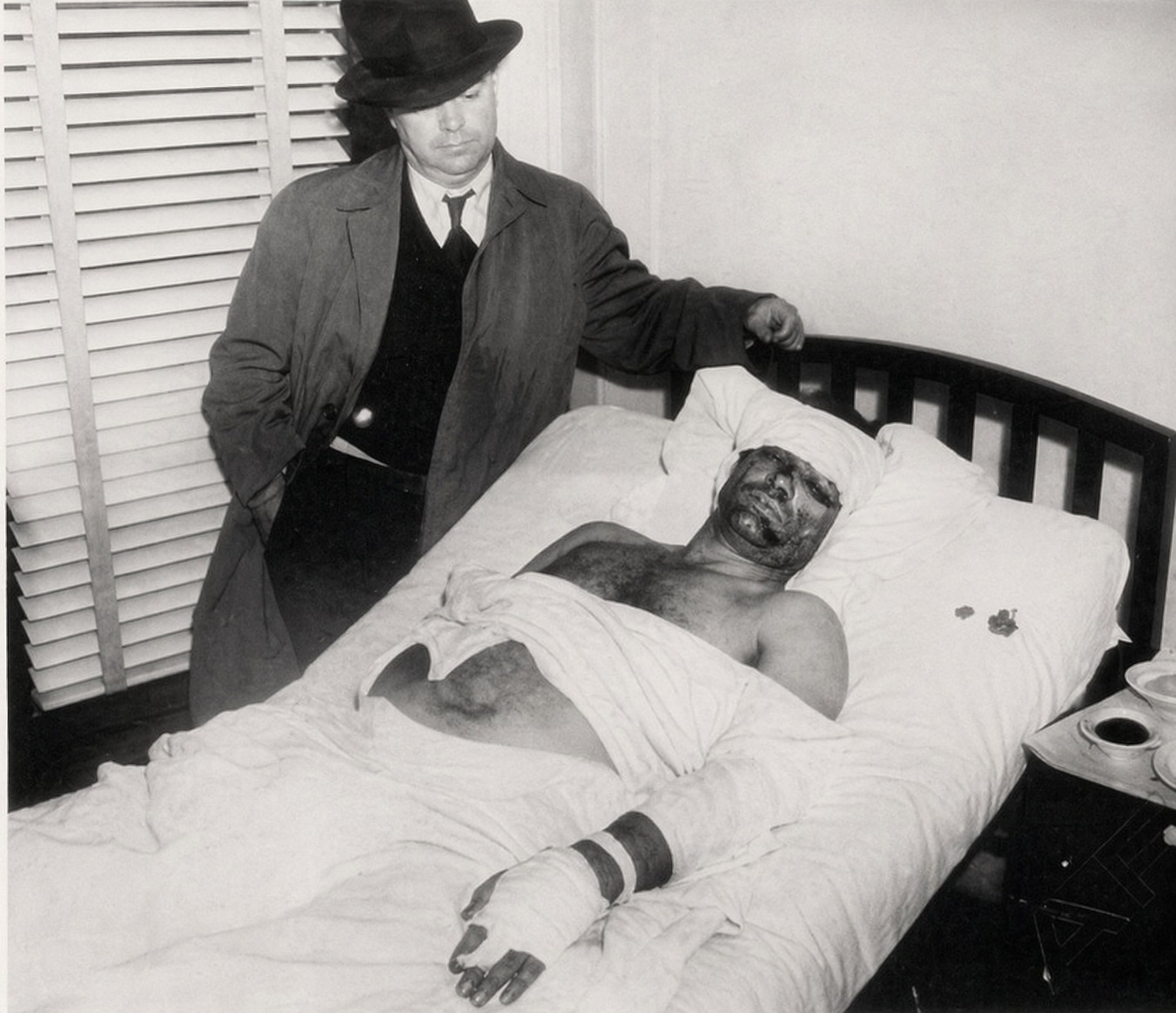
On December 1, 1945, in Little Rock, Arkansas, Kimes was struck by a poultry truck as he crossed the road. A pistol that fell from his pocket during the accident aroused suspicion, but because of the severity of his facial injuries, Kimes was not immediately recognized. Witnesses said a companion stayed with the injured man until the ambulance arrived, then disappeared. Police speculated that the companion was Alvin “Chick” Rogers.
Suspicion increased at Baptist State Hospital when Kimes refused to identify himself and refused to have his family notified. When presented with papers bearing the name Leo Woods of Miami, Oklahoma, Kimes claimed that was his name. Hospital staff became more suspicious when it was discovered that he was carrying $1,600 in his pockets. The hospital contacted police, who discovered that Woods’s car, along with his registration papers, had been stolen in November.
After hours of interrogation, and as officers prepared to take his fingerprints, the man finally confessed, saying, “Yes, I’m him.”
Kimes had suffered severe head, back, and internal injuries in addition to a fractured leg. Although wanted in Oklahoma, the Acting United States District Attorney denied Oklahoma’s request for custody, stating that Kimes would be returned to Texas to stand trial on charges of robbing the First State Bank of Morton once his condition permitted travel. The reckless driving charge placed against Joe Chamblee, driver of the truck that struck Kimes, was dropped once Kimes’s identity was learned. Kimes was placed under constant guard by the FBI, which stated that, on physicians’ advice, no further questioning would take place until he was free from the effects of all drugs.
The FBI was never able to get Kimes’s story of where he had been hiding. He died following an operation to address his internal injuries on December 14, 1945, at the age of 39. At the time of his death, Kimes was listed as “Public Enemy No. 1.”
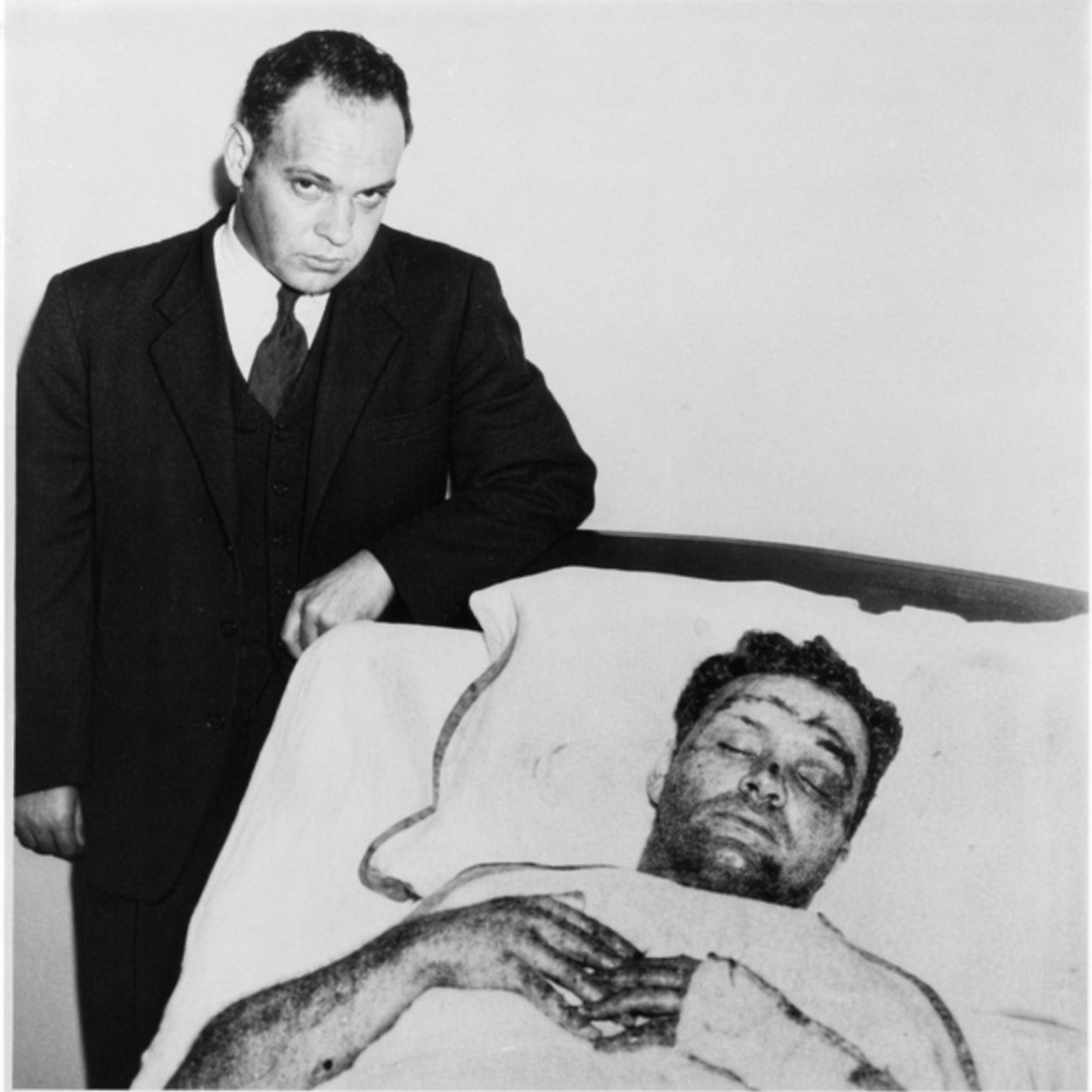
On December 4, 1945, Olaf Alvin “Chick” Rogers, accompanied by his attorney, walked into the FBI office in Oklahoma City and surrendered. Rogers pleaded innocent, and bond was set at $40,000.
On January 30, 1946, Ollie Melton’s plans to break out of the Dallas County Jail were discovered. Officers removed five saws from his cell, including three fine jewelers’ saws capable of cutting through steel, as well as two razors fashioned into weapons. Melton admitted to planning an escape. Two of the bars leading from the corridor showed signs of file marks.
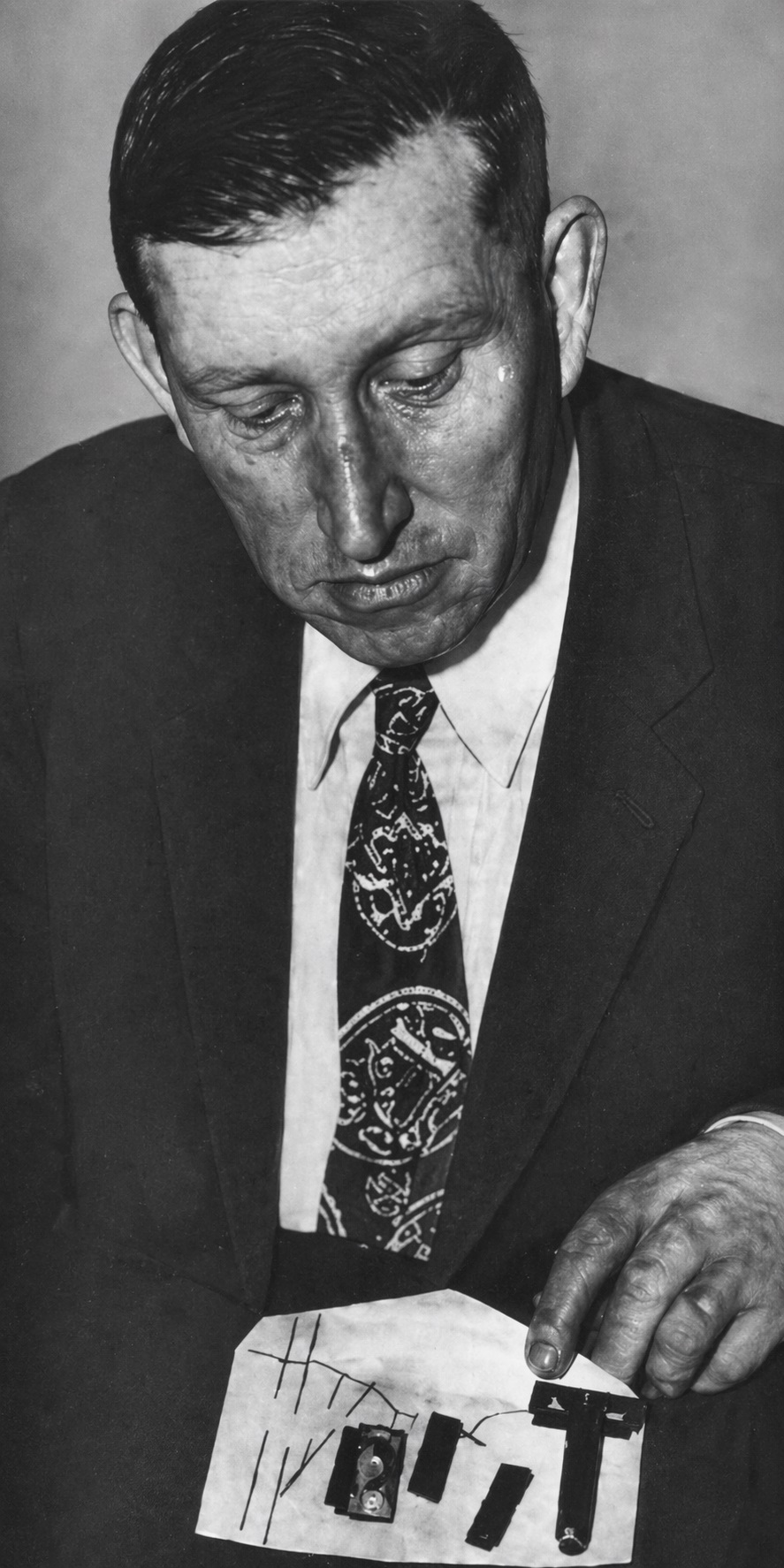
tools found in Ollie Oliver Melton's possession.
Dallas Morning News January 31, 1946
Trial
The Melton-Rogers-Pair trial began on May 28, 1946. The three men were transferred from the Dallas County Jail to Lubbock under heavy guard by United States Marshals without incident. All three pleaded guilty, and sentences were handed down that same day:
Ollie Oliver Melton — 25 years in an institution to be selected by the U.S. Attorney General
Olaf Alvin “Chick” Rogers — 15 years in an institution to be selected by the U.S. Attorney General
Fred Pair — 18 months
Judge J. Whitfield Davidson gave Pair the lighter sentence because of his “having told a straightforward account of the robbery to a federal grand jury impaneled in Dallas and in his generally helpful attitude toward federal, state, and county investigators.”
Aftermath
On June 21, 1946, 8-year-old Dixon Lee Lowther, nephew of Ollie Melton, and a 10-year-old friend in Shawnee, Oklahoma, were digging a hole behind the Lowther garage to hide fireworks they had been forbidden to keep. Dixon shouted to his mother, Faye (Melton) Lowther, “Mama, bring me a stew kettle, for I’ve struck a gold mine!”
When Mrs. Lowther saw the keg filled with dimes, nickels, quarters, and half dollars, she contacted the FBI. During examination of the coins, agents found a wrapper bearing the words “First State Bank Morton, Texas.” The coins totaled $1,201.40. Agents believed Ollie Melton had buried the money at his sister’s house without her knowledge.
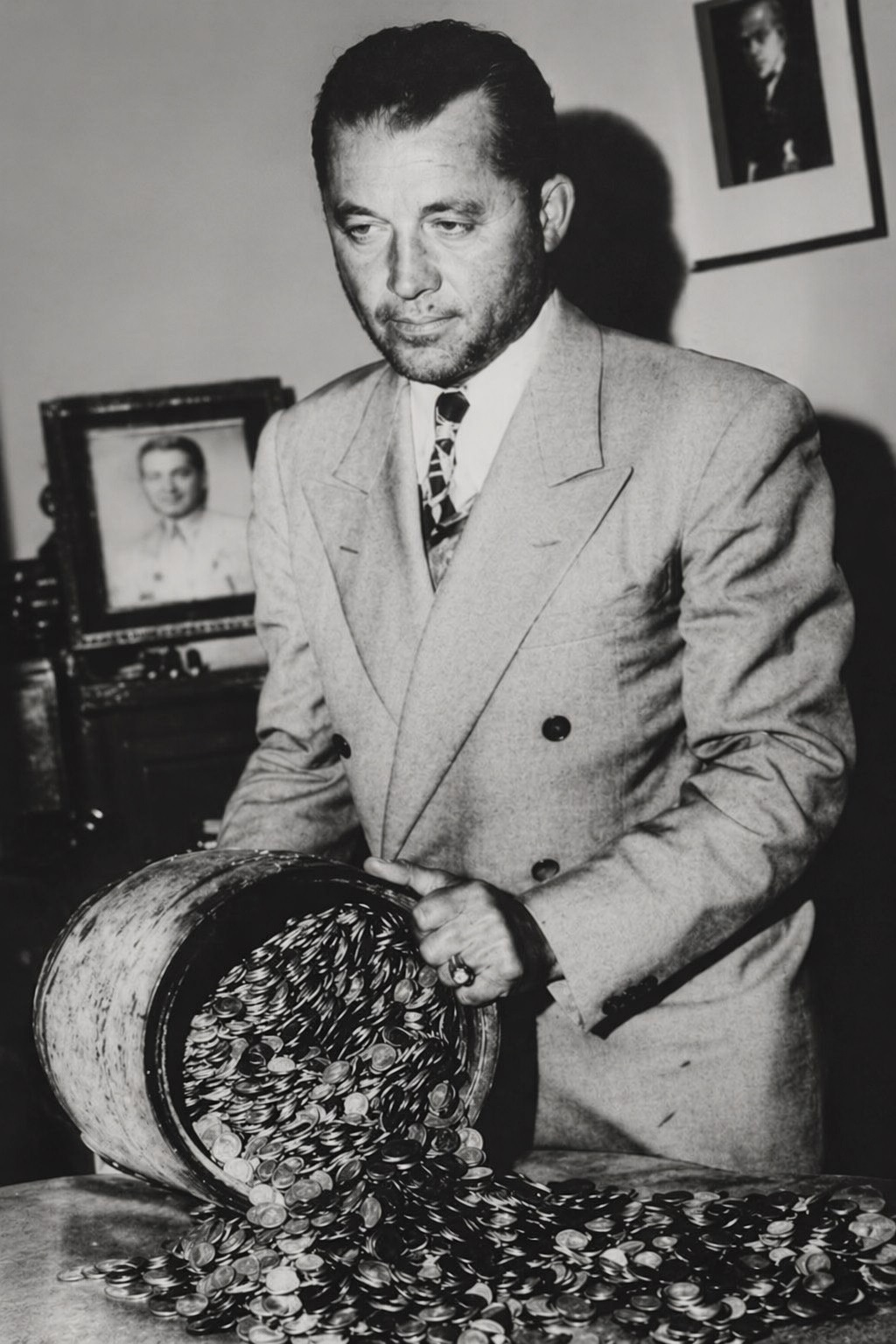
found in Shawnee, OK by Dixon Lee Lowther,
nephew of Ollie Melton
Sources
- The Repository, Canton, Ohio, Sunday, November 18, 1945
- Trenton Evening Times, Trenton, New Jersey, Sunday, November 18, 1945
- The Richmond Times-Dispatch, Richmond, Virginia, Sunday, November 18, 1945
- The Odessa American, Odessa, Texas, Thursday, September 6, 1945
- Lubbock Morning Avalanche, Thursday, September 6, 1945
- Texas’ Last Frontier: A New History of Cochran County, by Elvis E. Fleming and David J. Murrah
- Lubbock Morning Avalanche, Friday, September 7, 1945
- Lubbock Avalanche-Journal, Sunday, September 9, 1945
- The Gallup Independent, Gallup, New Mexico, Saturday, September 8, 1945
- The Abilene Reporter-News, Abilene, Texas, Sunday, October 29, 1945
- Lubbock Avalanche-Journal, Sunday, October 28, 1945
- Lubbock Morning Avalanche, Tuesday, November 20, 1945
- The Odessa American, Odessa, Texas, Monday, December 3, 1945
- Lubbock Morning Avalanche, Tuesday, December 4, 1945
- The Salt Lake Tribune, Salt Lake City, Utah, Saturday, December 15, 1945
- Valley Morning Star, Harlingen, Texas, Saturday, December 15, 1945
- Big Spring Herald, Big Spring, Texas, Wednesday, December 5, 1945
- Dallas Morning News, Dallas, Texas, Thursday, January 31, 1946
- The Neosho Daily News, Neosho, Missouri, May 28, 1946
- Lubbock Avalanche-Journal, Wednesday, May 29, 1946
- The Milwaukee Journal, Saturday, June 22, 1946